
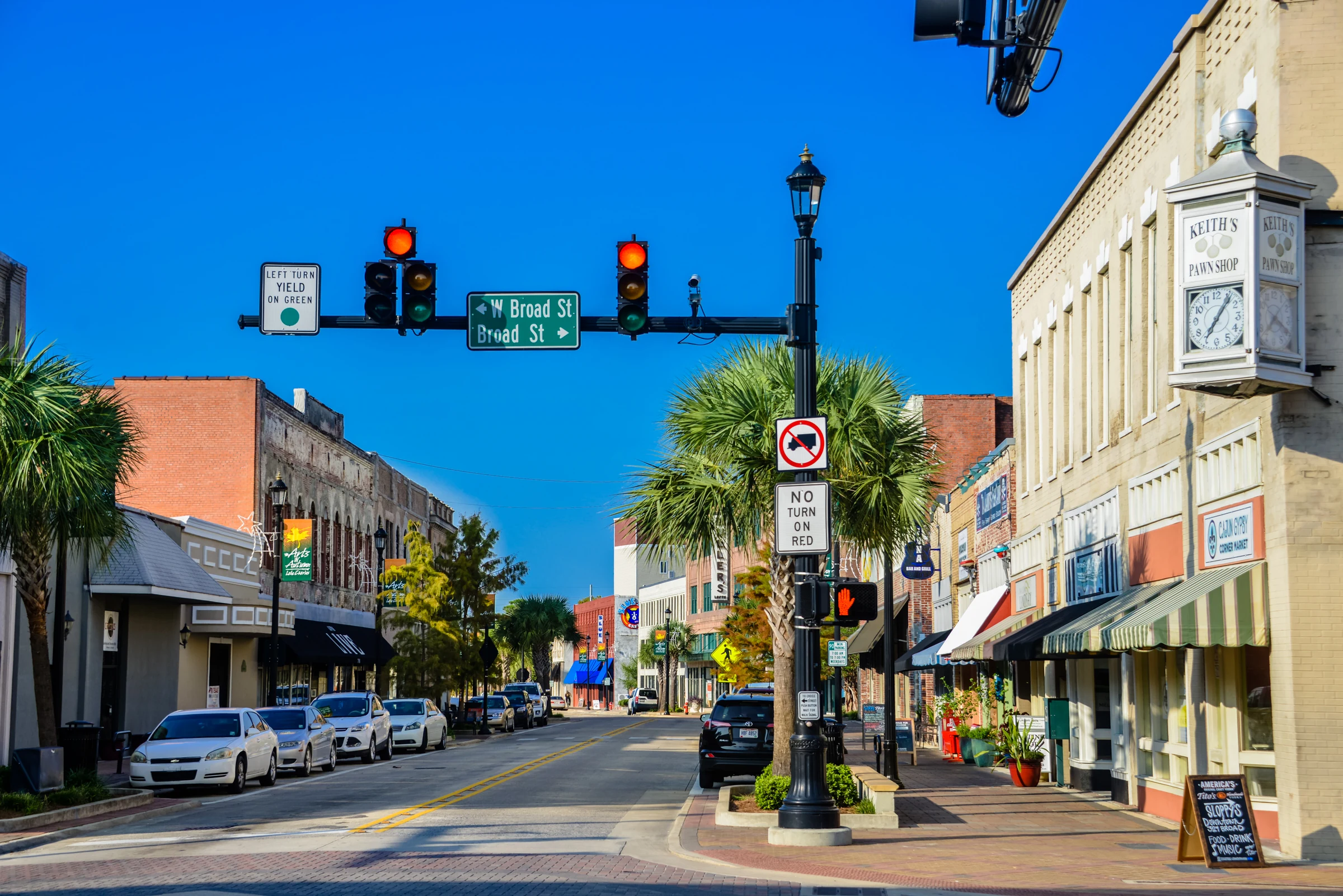
Commercial Roofers in Downtown Lake Charles
A practical commercial roofing plan for Downtown Lake Charles properties separates urgent leak control from repair, coating, maintenance, and replacement decisions supported by photos and condition findings. Drive down Ryan Street or past the Civic Center and you can still spot buildings with the same tarped sections and mismatched patch jobs from Hurricane Laura. Downtown took the worst of it in 2020, first Laura and then Delta six weeks later, and a surprising number of commercial roofs down here are still running on emergency repairs instead of a real fix.
Two Storms in Six Weeks
Laura came through as a Category 4 in late August and stripped roofing membrane, coping caps, and rooftop units off buildings across downtown, including sections of the tower that everybody in Lake Charles still points to when they talk about that year. Delta followed in October and hit a lot of the same buildings before permanent repairs were finished, which is part of why some downtown roofs never got a clean, complete fix. We've been pulling old blue tarp remnants out from under new membrane on jobs as recent as last year.
Casino and Hospitality Roofing
The casino resorts and the hotels that support them run large, complex roof systems with a lot of rooftop mechanical, kitchen exhaust, and specialty membrane sections that need to keep operating through construction. We schedule this work in phases so gaming floors, kitchens, and guest rooms stay dry and functional while a section of roof is under repair, which matters more here than on a standalone office building that can close for a weekend.
These properties also run a lot of rooftop signage, exterior lighting conduit, and event-related temporary structures that get added and removed over the years. Each one leaves a penetration or an old anchor point behind, and part of our inspection on a hospitality roof is finding and properly sealing whatever the last few tenant improvement projects left behind.
Offices and the Civic Center District
Downtown's office stock is a mix of older built-up roofs on mid-century buildings and newer TPO on renovated properties. A lot of these buildings share walls or sit close enough together that a leak on one roof shows up as water damage two floors down in the building next door, so drainage and parapet flashing get more attention here than in a standalone suburban building.
The Civic Center itself and the government buildings around it carry large flat roof areas with a lot of rooftop HVAC serving public assembly spaces. Because these buildings host events on a public schedule, we work with facilities staff to plan any roof access around what's booked in the building that week rather than just our own crew's availability.
Historic District Considerations
Buildings in and around the Charpentier Historic District come with roofline profiles and cornice details that a standard commercial crew can miss. We match roof edge and parapet detailing to the building's existing profile rather than defaulting to a generic edge metal package, because downtown's historic stock gets noticed if the roofline changes.
A number of these buildings also have parapet walls tall enough to hide most rooftop equipment from the street, which is good for the building's appearance but makes routine roof access harder. We plan equipment staging and material hoisting around those parapet heights before a crew ever shows up, rather than discovering the access problem on the first day of the job.
What We Handle Downtown
- Full tear-off and replacement of storm-compromised roofs still on emergency patches
- Phased roofing on occupied casinos and hotels
- Built-up and TPO reroofing on office and civic buildings
- Historic-district roof edge and parapet detailing
- Rooftop mechanical curb flashing and coordination
- Insurance documentation support for storm claims still working through the process
Getting Past the Temporary Fix
The most common call we get downtown isn't a new leak, it's a building owner who's finally ready to replace a roof that's been running on a Laura-era tarp or patch for years. We start with a full inspection and photo documentation, because a lot of these roofs have damage in more places than the original claim covered.
We also walk the interior of the top floor on these jobs, checking ceiling grids and insulation along with the roof surface, since years of intermittent leaking usually leaves damage that won't be obvious from above. A building owner deciding whether to finally fix the roof needs the full picture, beyond what's visible from a ladder.
Common Questions From Downtown Property Owners
My roof was patched after Laura. How do I know if it needs full replacement?
If the original repair was meant as temporary, or if you're still seeing active leaks in different spots each rain, it's worth a full inspection. A lot of downtown patches were never meant to last this long.
Can you keep a casino or hotel roof functional during repairs?
Yes. We phase the work section by section and coordinate around operating hours so gaming floors, kitchens, and guest areas keep running.
Do you match historic roofline details downtown?
We do. We look at the building's existing cornice and edge profile before we spec replacement materials rather than installing a standard package that changes the look of the building.
Why did some downtown roofs never get properly fixed after 2020?
Laura and Delta hit six weeks apart, and a lot of buildings were mid-repair from the first storm when the second one came through. Contractor and material availability afterward stretched timelines even further.
Do you help with insurance paperwork on old storm claims?
We document roof condition with photos and written reports that support your claim process. We don't handle the claim itself, but we make sure the roof evidence is thorough.