SBS Modified Bitumen Roofing for Lake Charles Reroofs and Rebuilds
SBS modified bitumen is a multi-ply system, and after watching single membranes fail at isolated puncture points during Laura and Delta cleanup, a lot of building owners around Lake Charles ask about it specifically for that redundancy. It's an older technology, but it's not an outdated one.
Why Multi-Ply Redundancy Still Matters After Two Storm Seasons
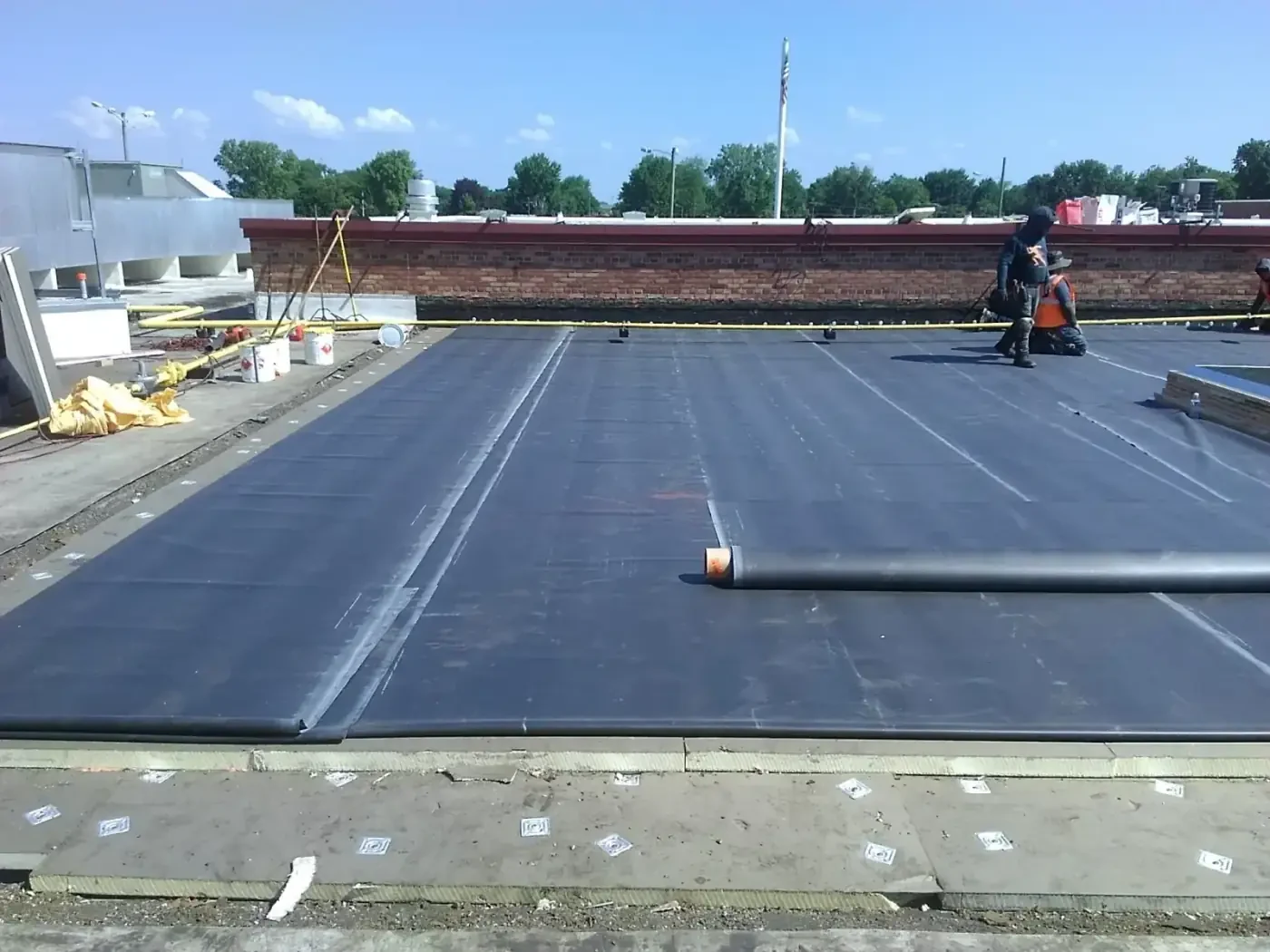
A single-ply membrane depends on one continuous layer staying intact. SBS modified bitumen builds waterproofing across a base sheet and a cap sheet, torched, hot-mopped, or cold-adhered together, so a localized puncture or seam issue in one layer doesn't automatically mean a leak.
That redundancy matters most on roofs with heavy foot traffic, dropped tools, or storm debris impact , situations common during post-hurricane cleanup and repair work, when a roof is taking abuse from the recovery process itself, not only the storm.
Torch-Applied vs Cold-Adhesive Near Industrial Sites
Torch application is still the most common installation method for SBS, but open flame on a roof near a fuel storage yard, a plant lay-down area, or anywhere with vapor concerns isn't something we'll do without a hard look at the surroundings first. Around Sulphur, Westlake, and Carlyss, we default to cold-adhesive or self-adhered SBS on anything close to industrial operations.
Cold-adhesive installation takes longer and costs more in labor, but it removes the open-flame risk entirely. For a building manager weighing options near a plant boundary, that trade-off is usually worth the extra line-item cost.
Cap Sheet UV Resistance in Gulf Sun
Granulated cap sheets handle Gulf Coast UV exposure well, but granule loss over time is real and worth tracking. A cap sheet shedding granules in sheets rather than gradually is telling us the membrane underneath is aging faster than it should.
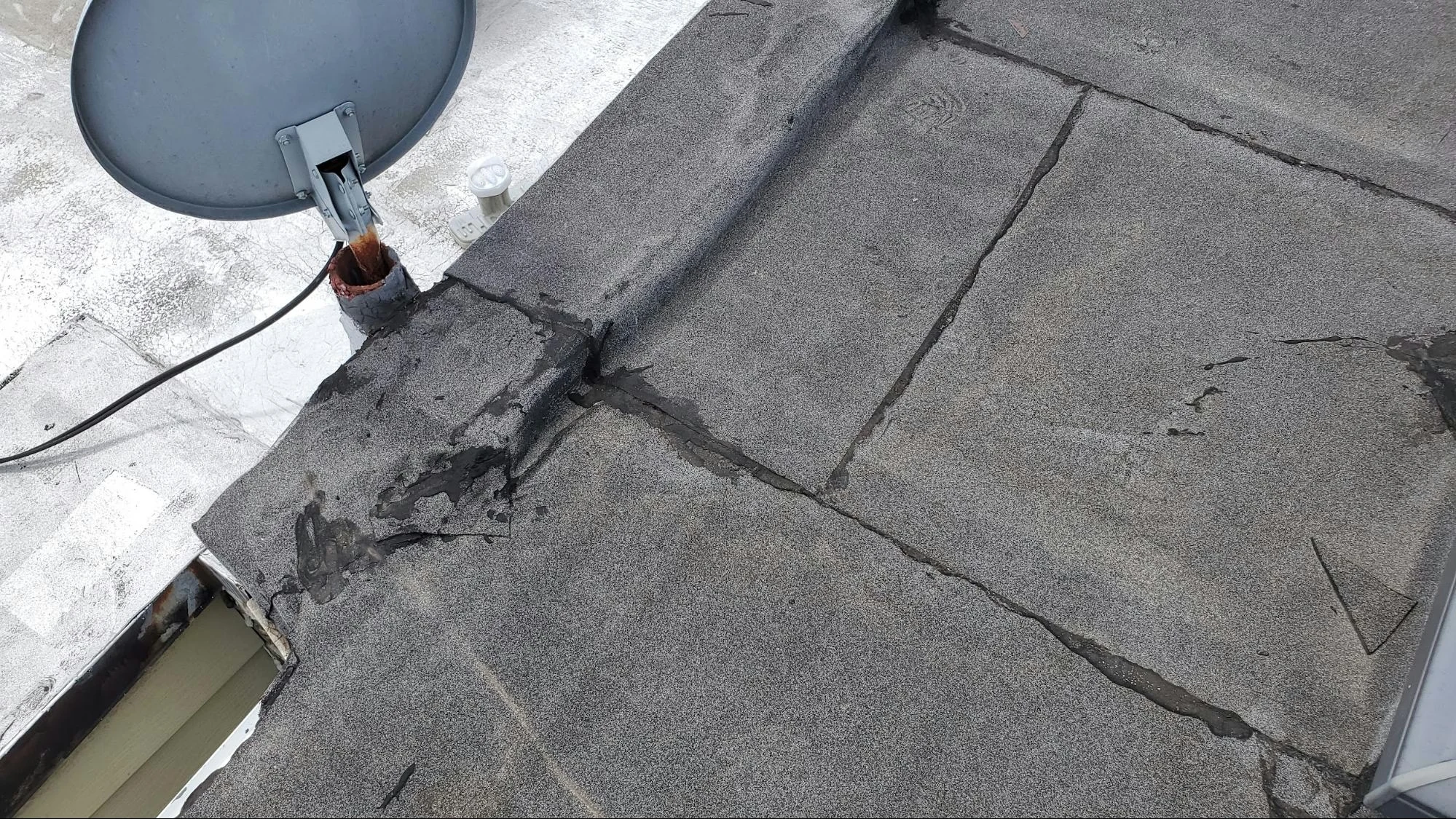
We check granule embedment and look for alligatoring , the cracked, dried surface pattern that shows up on cap sheets pushed past their UV-resistant life , during every inspection on an SBS roof. Catching that early is cheaper than waiting for a leak to force the conversation.
Where SBS Fits Best on a Mixed Roof
SBS shows up most often on:
- Mechanical penthouses and rooftop additions over an existing single-ply roof
- Older built-up roofs due for a full tear-off and multi-ply replacement
- Low-slope sections on buildings with steep-slope shingle roofs elsewhere
- Government and municipal buildings on longer capital-replacement cycles
- Hospital and healthcare buildings prioritizing redundancy over reflectivity
SBS isn't usually the first system we recommend on a wide-open warehouse roof with no complicated geometry , a single-ply membrane is often the more economical choice there. It earns its place on roofs with more complexity or a higher tolerance requirement for redundancy.
Multi-Ply Systems on Larger Capital Projects
Government and institutional buildings around Lake Charles often plan roof replacement on longer capital cycles than private commercial owners, and that changes how we approach the SBS conversation. A multi-ply system's higher installed cost is easier to justify when the building is planning for a longer service life and a slower replacement schedule to begin with.
On these projects we also spend more time on phasing. A school or municipal building can't always shut down for a full reroof during the school year or an active budget cycle, so we sequence SBS installation in sections, tying each phase to a natural building-use break rather than forcing the whole roof open at once.
Documentation matters more on capital projects too. Boards and finance committees want a clear record of what was installed, when, and to what specification, which is part of why we keep detailed installation records on every multi-ply job regardless of building type.
Hospital and healthcare buildings raise the stakes further, since roof leaks near surgery suites, imaging equipment, or patient care areas carry a different level of consequence than a leak over a storage room. On those buildings, we lean toward the redundancy SBS offers even when a single-ply system could technically meet the wind and fire requirements, simply because the cost of an unexpected interior leak is so much higher, and downtime for sensitive equipment isn't something that can wait for a convenient repair window, especially when patient care is involved.
What Owners Ask Before Choosing SBS
Is torch-down roofing still allowed near industrial buildings?
It depends on proximity to fuel storage, vapor sources, and site-specific fire watch requirements. Near plant boundaries, we typically recommend cold-adhesive or self-adhered SBS instead of open-flame torching.
How long does SBS modified bitumen typically last here?
Service life depends on installation method, cap sheet quality, and maintenance, but a properly installed multi-ply system is a long-term roof, not a short-term patch.
Can SBS be installed over an existing membrane?
Sometimes, if the existing roof and deck are structurally sound and dry. We evaluate the existing assembly before recommending a recover over a full tear-off.
Does modified bitumen need a reflective cap sheet in this climate?
Not always, but a reflective or granulated cap sheet helps manage surface temperature and UV degradation. We discuss cap sheet options based on the building's cooling needs and budget.
Can an SBS reroof be phased on an occupied government or school building?
Often, yes. We sequence the work in sections tied to natural building-use breaks, coordinate closely with facilities staff, and confirm weather-tight conditions at the end of each phase so the facility isn't forced to close for the full duration of the project.