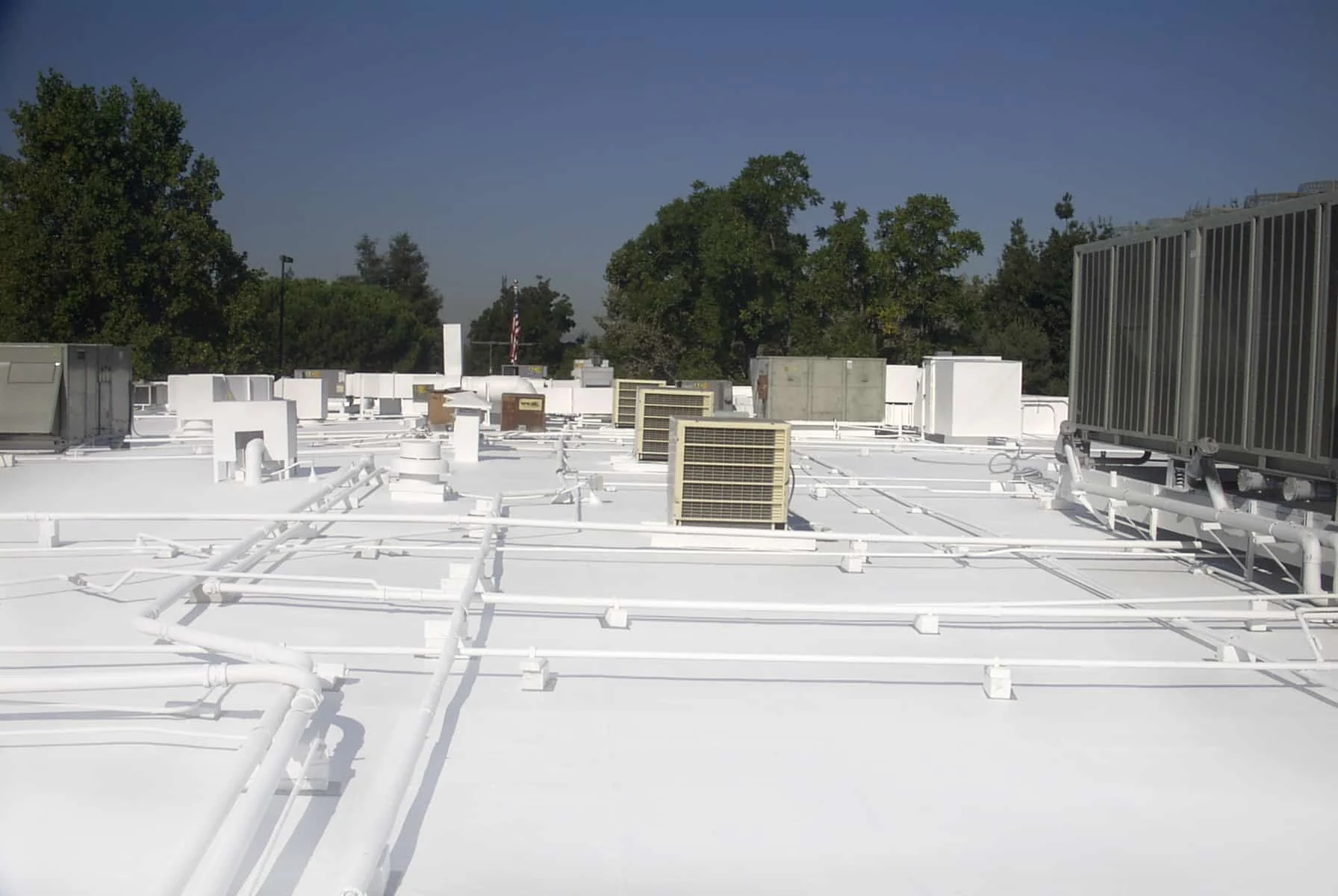
PVC Roofing for Chemical-Exposed Buildings Near the Lake Charles Industrial Corridor
PVC membrane resists oils, greases, and airborne chemical fallout better than EPDM and most TPO formulations, which makes it the membrane we reach for first on buildings near the petrochemical corridor around Westlake and Sulphur, and on restaurant roofs dealing with constant grease exhaust.
Why Chemical Exposure Changes the Membrane Conversation
Refineries, the Sasol complex, and related plant operations along Highway 90 and the Calcasieu Ship Channel put airborne hydrocarbons and process byproducts into the air that settle on nearby rooftops over time. Standard rubber membrane can soften or degrade under sustained exposure to petroleum-based contaminants. PVC's chemical makeup resists that breakdown significantly better.
We don't automatically spec PVC on every building near the plants , a lot depends on prevailing wind direction, distance from the source, and which specific operations sit nearest the property. But for a building sitting downwind of regular flaring or process venting, PVC is usually the first system we bring up.
Grease Exhaust and Restaurant Roofs
Restaurant roofs are the other place chemical resistance matters, independent of the industrial corridor. Rooftop grease exhaust from kitchen hoods lands on the membrane around the exhaust fan and works its way across the roof over years. EPDM in particular can soften and swell under sustained grease contact.
PVC holds up to grease exposure far better, which is why we push back when a standalone restaurant comes to us wanting the cheapest membrane option. The exposure isn't hypothetical , we've pulled failed EPDM off restaurant roofs around Lake Charles that softened years before it should have failed.
Heat-Welded Seams and Long-Term Watertightness
PVC seams are hot-air welded, similar to TPO, producing a homogenous bond rather than a taped or adhered seam. In practice that means the seam becomes chemically part of the membrane rather than a separate joint that can peel or age independently.
In Gulf humidity, we watch dew point on PVC welding the same way we do on TPO , welding too early on a humid morning or into an incoming storm front produces weaker test results. Every seam gets probed before the crew moves to the next section, not only spot-checked at the end of the day.
Buildings Where We Specify PVC First
Buildings where PVC is usually our first recommendation:
- Facilities within direct line of plant flaring or process exhaust near Westlake and Sulphur
- Standalone restaurants and any building with rooftop grease exhaust
- Manufacturing buildings with rooftop solvent or chemical venting
- Buildings near fueling operations or truck fleet maintenance yards
- Kitchens and food-service buildings inside larger commercial complexes
For a retail building or office with no chemical exposure, PVC's benefits matter less, and TPO or EPDM usually make more financial sense. See our TPO 60 mil page for that comparison.
Cost and Long-Term Value Compared to TPO and EPDM
PVC costs more upfront than TPO or EPDM in most cases, and we don't pretend otherwise. The premium reflects the membrane's chemical formulation and the welding process, not markup for its own sake. On a building without real chemical exposure, that premium buys durability the roof doesn't need.
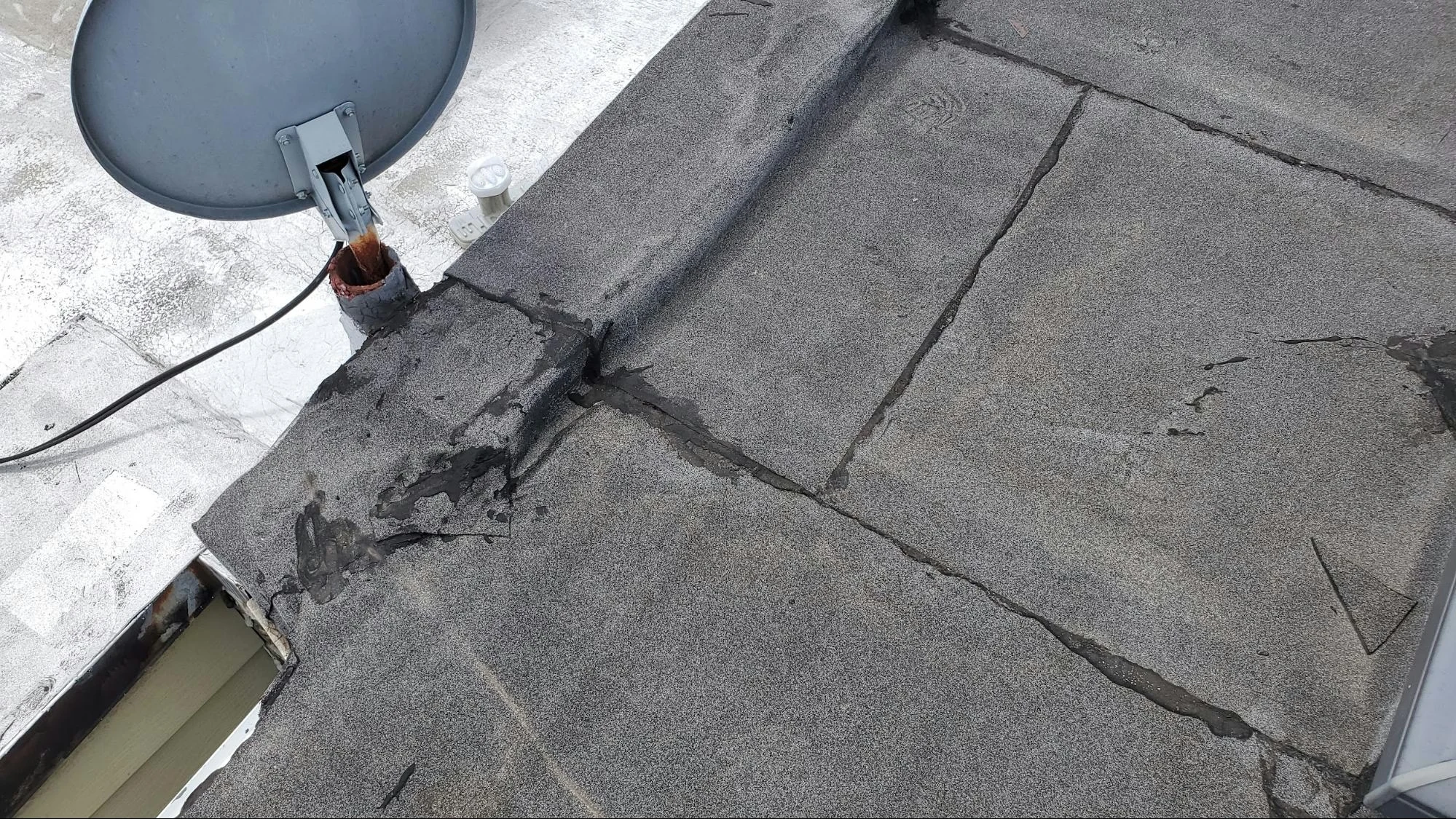
The value calculation changes on a building with actual exposure. We've seen EPDM roofs near restaurant exhaust and light industrial fallout need replacement years earlier than their rated life because the membrane itself degraded, not because of a workmanship problem. Factoring in an early replacement cycle, PVC's higher upfront cost often works out cheaper over the roof's full service life.
We lay out both numbers when a building sits in a gray area , moderate exposure, uncertain wind patterns, a facility that might expand its process operations later. Sometimes the honest answer is that either membrane works, and the decision comes down to budget timing rather than a clear technical requirement.
Existing rooftop equipment and future plans matter here too. A building that plans to add process equipment, additional exhaust venting, or expanded plant operations down the line is worth spec'ing for that future exposure now rather than installing a lower-cost membrane that will need early replacement once the building's actual use changes, which usually costs more in the long run than paying for the right membrane the first time around.
PVC Questions From Industrial and Restaurant Owners
Is PVC really necessary if my building isn't right next to a plant?
Not always. Chemical exposure depends on prevailing wind and proximity, not only being somewhere in the general vicinity. We look at the specific site before recommending PVC over a lower-cost membrane.
How does PVC compare in cost to TPO?
PVC generally costs more per square than TPO, reflecting its chemical-resistant formulation and welding requirements. For a building with real chemical exposure, that added cost is usually cheaper than replacing a degraded membrane early.
Can PVC be installed over an existing EPDM roof?
Sometimes, depending on deck and insulation condition. We check for wet insulation and existing seam failure before recommending a recover rather than a full tear-off.
Does PVC hold up to hurricane wind uplift requirements?
Yes, with fastening patterns and cover board built to the site's wind exposure category, PVC meets the same uplift standards we design into TPO and EPDM installations.
Is PVC's higher cost worth it over the life of the roof?
For a building with real chemical or grease exposure, usually yes, once early-replacement risk on a lower-cost membrane is factored in. For a building with no meaningful exposure, the premium may not be worth paying.