Repairing Hurricane and Straight-Line Wind Damage on Lake Charles Roofs
Hurricane Laura came through as a Category 4 storm with its eyewall passing almost directly over the city, and Hurricane Delta followed the same track about six weeks later while a lot of roofs were still mid-repair. That back-to-back sequence gave us a compressed education in every way wind can damage a commercial roof, and it still informs how we assess and repair storm damage today, whether it comes from a named hurricane or a summer straight-line wind event.
How Wind Actually Damages a Flat or Low-Slope Roof
Wind doesn't usually peel a membrane off from the middle of the field. It gets under an edge, most often at a parapet corner, a rooftop unit curb, or a section of edge metal that's come loose, and once it's under the membrane it works outward from that point. Corners and perimeters take the worst of it because wind uplift forces are highest exactly there, which is why so much of our post-storm damage work concentrates on those zones rather than the open field.
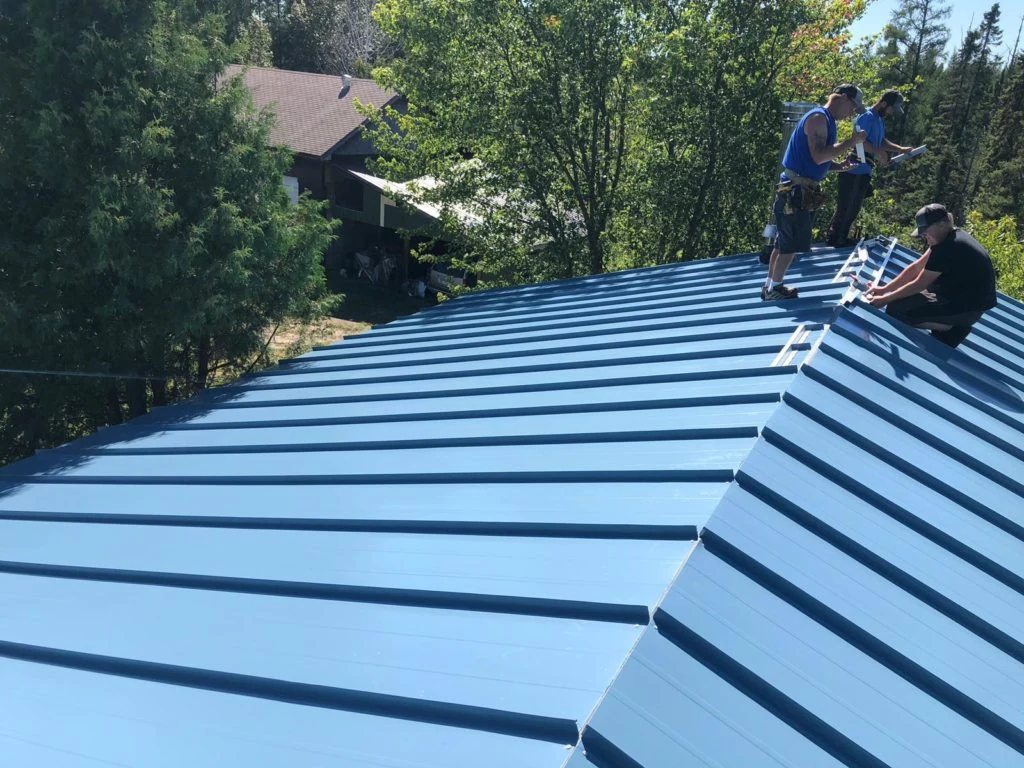
Metal panel roofs fail differently. Standing seam and R-panel systems typically show damage at clip attachment points or where a panel seam wasn't fully engaged, and once one panel starts to lift, the wind gets underneath its neighbors in sequence. We saw this pattern repeatedly across the parish after Laura, where a roof would look mostly intact from the ground but had a cascading string of lifted panels along one edge.
Assessing Damage Before Any Repair Begins
We walk the entire roof after a storm rather than only the area where the reported damage is visible, because wind uplift at one corner is often a sign that other corners took similar stress even if they haven't failed yet. This full-roof approach is something we adopted directly out of the Laura and Delta response, after seeing buildings come back for a second emergency call within weeks because only the obviously damaged section got addressed the first time.
Assessment includes checking insulation moisture content anywhere water reached the deck, since storm damage almost always brings water intrusion along with the physical wind damage, and a repair that only replaces the torn membrane without addressing wet insulation underneath won't hold.
Repair Versus Replacement After a Major Wind Event
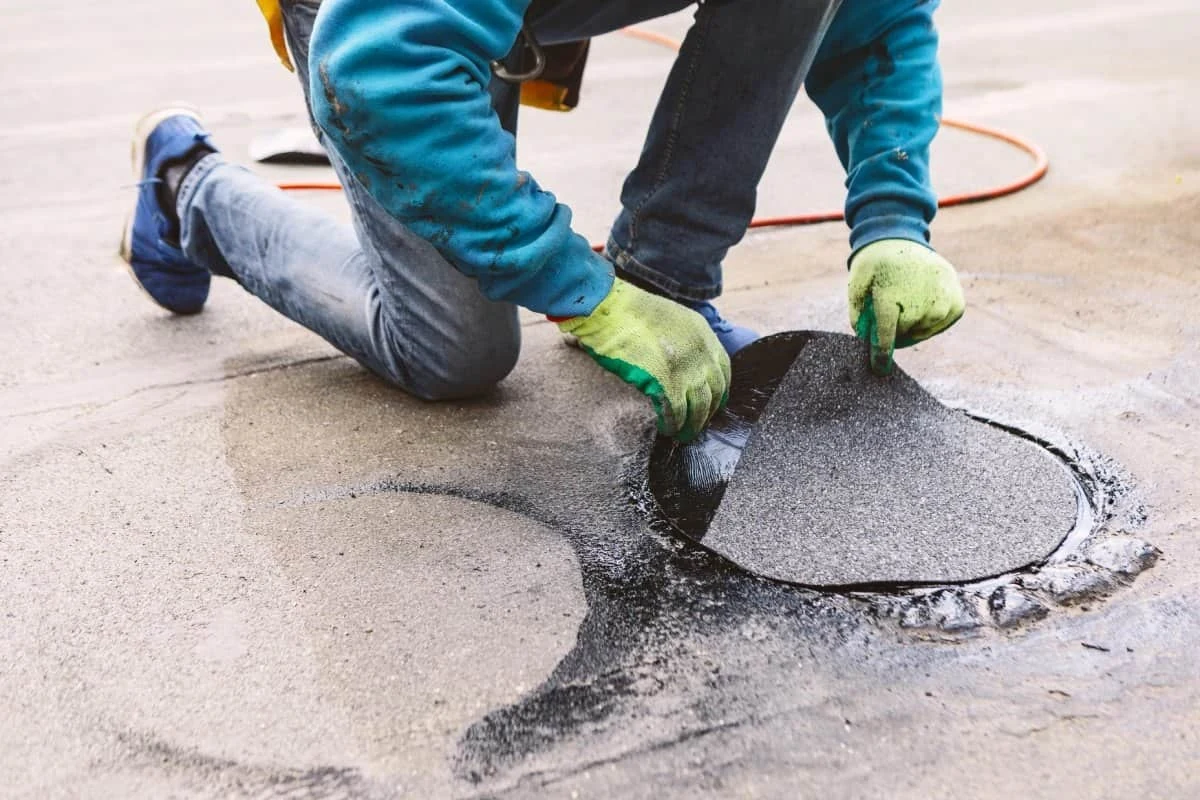
Some storm damage is isolated enough that a section repair makes sense, replacing membrane, insulation, and flashing in the affected area while leaving the rest of the roof in service. Other times, especially on a roof that was already near the end of its service life before the storm, the damage tips the math toward a full reroof rather than repeated section repairs.
We give owners a straightforward read on which situation they're in, based on the roof's age, remaining life, and how much of it was affected. A ten-year-old membrane with damage isolated to one corner is a repair. A twenty-year-old membrane with wind damage in three separate areas is usually better served by a full reroof, since more section repairs on an aging system just delays the same conversation.
- Full-roof walk after any storm, not limited to the reported damage area
- Insulation moisture check anywhere wind opened a path for water
- Edge metal, coping, and parapet corner inspection, since these fail first under uplift
- Metal panel seam and clip check for cascading lift damage
- Photo documentation of every damaged area, before and after repair
- Straightforward repair-versus-replacement recommendation based on roof age and damage extent
Rebuilding to Handle the Next Storm, Not Only This One
Every storm repair we install gets detailed to current wind uplift standards at that specific location, particularly at corners and perimeters where the original installation may have used a lighter fastening pattern than current wind maps call for in this parish. Repairing storm damage with the same detailing that failed the first time just sets up the same failure in the next event.
On metal panel roofs, that often means upgrading clip spacing or seam engagement at repaired sections even if it exceeds what's strictly required, since a roof that's already shown a wind vulnerability at one edge is worth reinforcing rather than restoring to exactly its prior condition.
Working Alongside Plant and Casino Recovery Timelines
Storm response on plant buildings near the Westlake and Sulphur corridor moves on a different clock than retail, since a plant may need partial roof repair completed around ongoing operations or a phased restart schedule. We coordinate directly with facility management to sequence repair work without creating additional operational risk.
Casino and hospitality properties along the lakefront, several of which took direct hits during both 2020 storms, often need repair phased around reopening timelines, since these buildings represent both a significant local employer base and a meaningful piece of the parish's tax revenue. We treat those timelines seriously without cutting corners on the repair itself.
Storm Damage Repair Questions
How soon after a storm should I get my roof inspected?
As soon as it's safe to access the roof. Wind damage that isn't leaking yet can still be a failure waiting for the next rain, and catching it early is far cheaper than waiting for an active leak to develop.
Will you find damage I can't see from the ground?
Very often, yes. Lifted seams, loosened fasteners, and corner uplift frequently aren't visible from street level, which is why a full rooftop walk matters after any significant wind event.
Can storm damage repair be done while the building stays occupied?
In most cases, yes. We section off the work area and coordinate access with building operations so occupied spaces aren't disrupted more than necessary.
Do you handle both membrane and metal panel storm damage?
Yes, we repair storm damage across TPO, EPDM, PVC, modified bitumen, built-up, and metal panel systems, since Calcasieu Parish has a mix of all of these across its commercial building stock.
How do you decide if damage warrants a full reroof instead of a repair?
We weigh the roof's remaining service life against the extent and location of the damage, and we walk owners through that reasoning directly so the decision is based on the actual condition found, not a default toward the more expensive option.