What EPDM Still Gets Right on Older Lake Charles Roofs
EPDM is not the roof everyone is talking about anymore, but a lot of buildings around Calcasieu Parish still have it, and a lot of those roofs are due for a real conversation about whether to repair, recover, or replace. We work on EPDM roofs the way we work on anything else here: we look at what the storms and the humidity have actually done to it before recommending a path forward.
Where EPDM Still Makes Sense
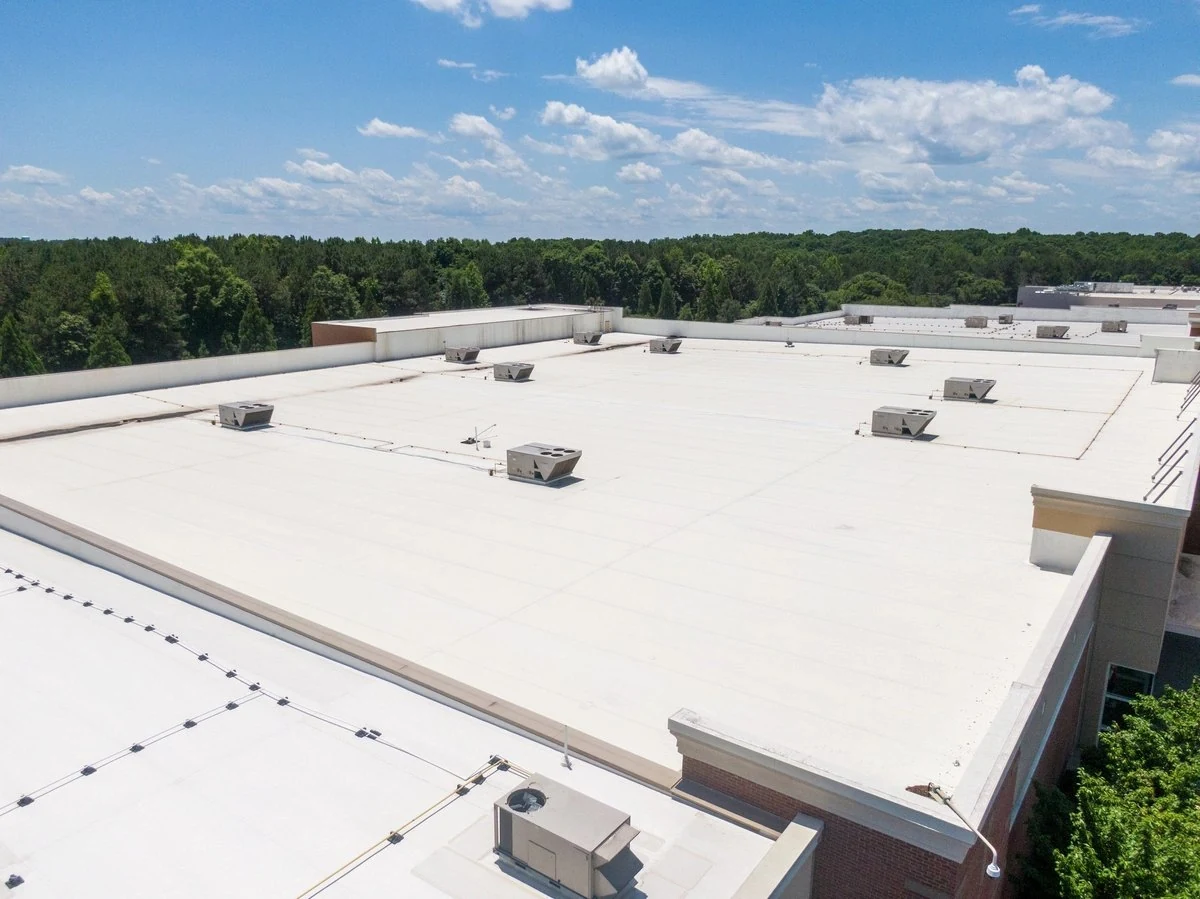
EPDM's rubber membrane handles UV exposure and temperature swings well over a long service life, and it remains a reasonable option for certain low-slope buildings, particularly ones without heavy rooftop traffic. Older office buildings and some school and government roofs across the parish were built on EPDM decades ago, and plenty of those roofs still have life left if the seams and flashing have held up.
Black EPDM absorbs more heat than TPO or a coated white roof, which matters less on a building with good insulation underneath and matters more on one where cooling costs already run high. White EPDM exists for that reason, and we bring it up on any job where heat gain is a real cost concern.
Ballasted EPDM and Wind: A Conversation We Have To Have
Ballasted EPDM systems use loose stone or pavers to hold the membrane down instead of full adhesion or mechanical fastening. In a wind zone that took a direct Category 4 hit from Laura and a second hurricane six weeks later, ballast is a liability we take seriously. Loose ballast becomes flying debris in high wind, and once wind gets under the membrane at an edge, a ballasted system has less holding it down than a fully adhered or mechanically attached one.
On any EPDM re-roof or major repair in this market, we talk owners through converting away from ballast toward a fully adhered or mechanically fastened system, especially on buildings near the coast or the ship channel where wind exposure runs higher.
We have inspected roofs after past storms where ballast stone had scoured clear off one corner of a building and piled up against a parapet on the downwind side, taking the membrane's protective layer with it and leaving bare rubber exposed to UV it was never meant to see directly for long. That kind of damage is preventable with a different attachment method, and it is worth the conversation even on a roof that otherwise still has years left in it.
Seam Tape Is the Real Weak Point in This Climate
EPDM seams rely on adhesive tape rather than heat welding, and that tape ages differently in constant Gulf humidity than it does in a drier climate. We see EPDM seams that looked sound for years suddenly open up after a stretch of heavy rain and heat cycling, usually where the original tape work was inconsistent. We inspect seam tape condition closely on every EPDM job, since that is usually where an aging roof starts leaking before the field membrane itself shows any wear.
Owners often assume a leak means the membrane failed somewhere in the middle of the roof. In our experience with EPDM here, the field membrane is rarely the culprit. The leak almost always traces back to a seam, a pipe boot, or a flashing detail where the original tape or sealant gave out long before the rubber sheet itself showed any sign of aging.
Common Building Types We See EPDM On
EPDM shows up most often on a specific slice of the parish's building stock, and we approach each type a little differently based on traffic, exposure, and what the roof protects.
- Older downtown office buildings with decades-old EPDM still in service
- School and government buildings with low maintenance budgets and aging roofs
- Some warehouse and distribution roofs along Highway 90 installed before TPO became standard
- Church and community buildings with limited rooftop equipment
- Strip retail buildings with flat sections behind sloped street-facing facades
For a lot of these buildings, the real decision is not whether EPDM is a good membrane in general. It is whether this specific roof's seams, flashing, and ballast condition justify another repair cycle or point toward a full recover.
What We Check Before Recommending Anything
We look at seam tape condition first, since that usually tells us the most about remaining service life. Then we check flashing at parapets and penetrations, ballast condition and coverage if the system is ballasted, and whether standing water collects anywhere on the field. Ponding water on an aging EPDM roof accelerates seam failure faster than almost anything else we see.
Questions Owners Ask About EPDM Here
Is a ballasted EPDM roof a real risk in a hurricane?
Yes, more than owners usually expect. Loose ballast can become wind-driven debris, and the system offers less wind resistance than a fully adhered or mechanically fastened roof. We recommend converting away from ballast on most re-roofs in this wind zone.
Can a leaking EPDM seam be repaired instead of replacing the whole roof?
Often, yes, if the damage is limited to a section of tape and the rest of the membrane is sound. We check the broader seam condition before recommending a spot repair, since one failed seam sometimes signals others nearby.
Should I switch from black EPDM to a lighter membrane?
It depends on your cooling costs and roof insulation. If heat gain is a real expense, moving to white EPDM or a reflective coating during a recover is worth evaluating.
How do I know if my EPDM roof is past repair?
Widespread seam failure, ponding water that won't drain, and membrane that has become brittle rather than flexible are all signs the roof is closer to replacement than repair.
Do you convert ballasted roofs during a recover?
Yes, that is a standard part of the conversation on any ballasted EPDM roof we recover in this market, given our wind exposure.