The Tar-and-Gravel Roofs Downtown Are Running Out of Road
Walk a few blocks of downtown Lake Charles and you will find built-up roofs that have been patched, re-graveled, and patched again since before most of our crew was born. Built-up roofing earned its long run through durability, but a lot of these roofs are now old enough that the honest conversation is not another patch. It is whether the building is ready for what comes next.
Why Built-Up Roofs Lasted This Long
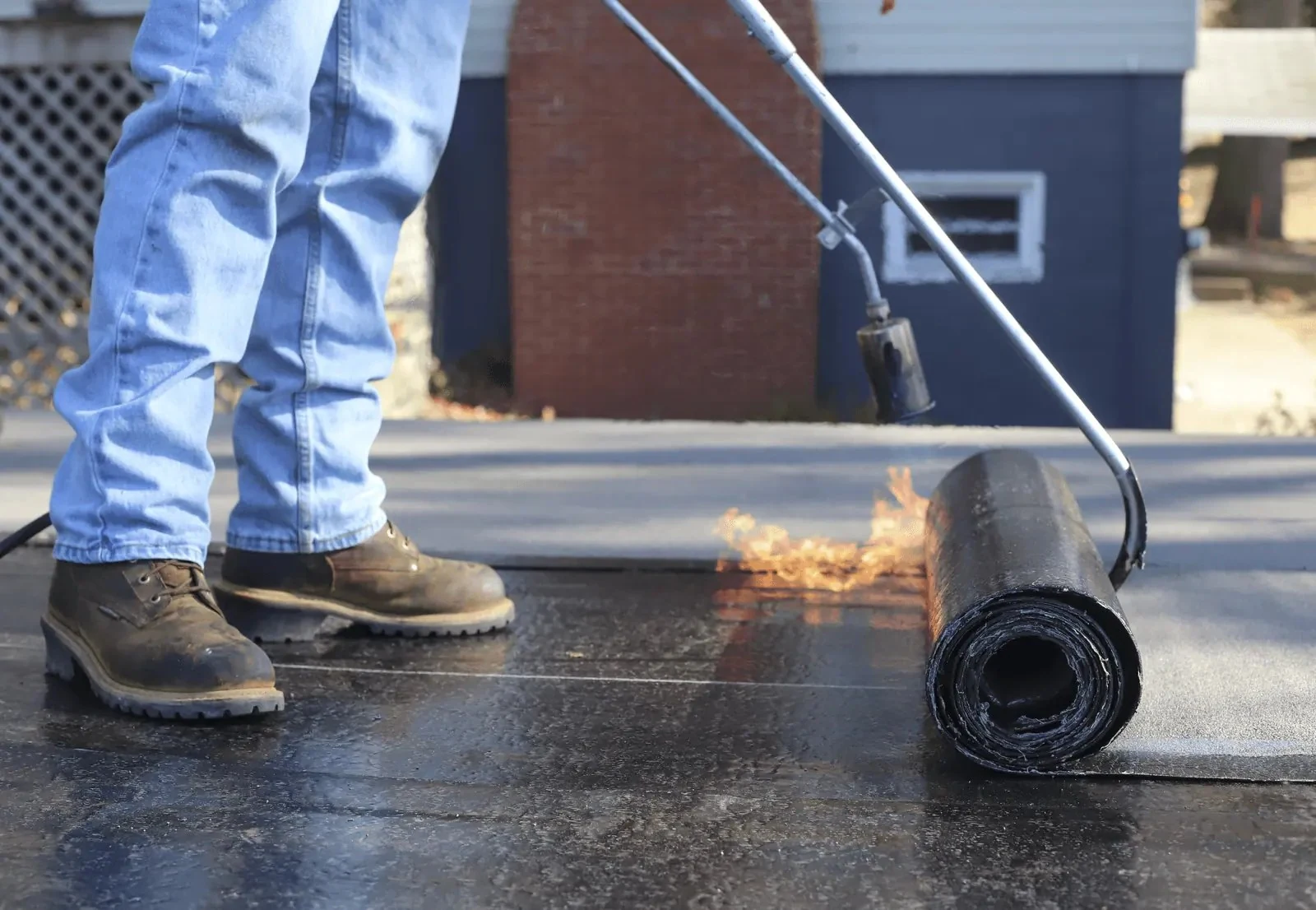
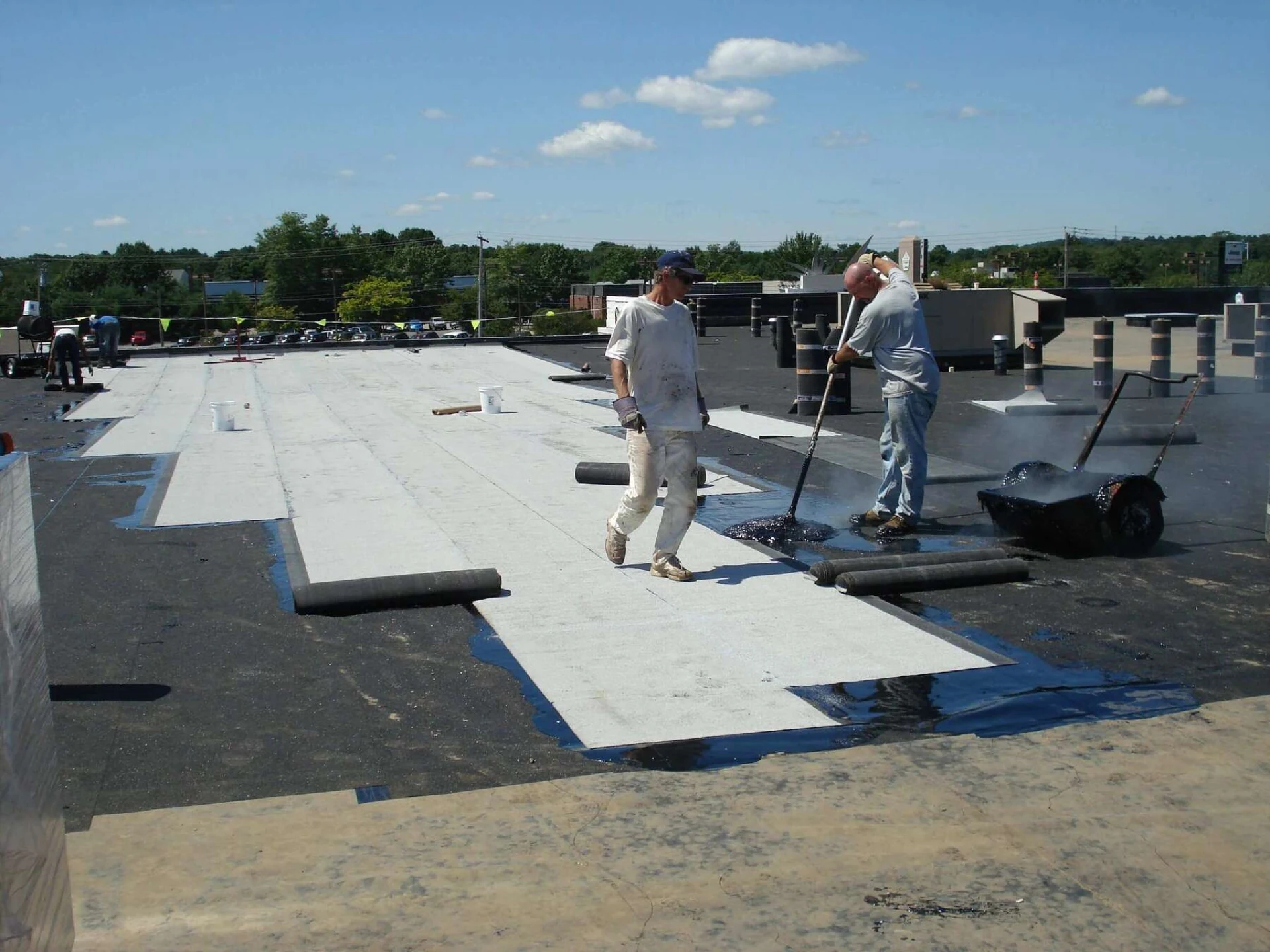
A built-up roof stacks multiple plies of asphalt-saturated felt with hot asphalt between each layer, then finishes with a gravel or mineral cap sheet. That mass gives it real resistance to foot traffic and puncture, and it explains why so many school, government, and older office buildings across Calcasieu Parish still have their original built-up system decades after installation, sometimes with a recover layer or two added along the way.
The tradeoff is weight and inspection difficulty. A gravel-surfaced built-up roof hides its condition under loose stone, so problems that would be obvious on a membrane roof stay invisible here until a leak actually shows up inside the building.
What Gravel Ballast Does in a Hurricane
Loose gravel surfacing on a built-up roof becomes a genuine hazard once wind speeds climb into hurricane range. During Laura and Delta, we saw gravel scoured off roof surfaces and driven into windows, vehicles, and neighboring buildings, on top of the roof damage the storms caused directly. That is not a rare event on an older gravel-surfaced roof in this wind zone; it is close to expected behavior once sustained wind gets high enough to lift stone.
On any built-up roof recover or major repair we handle now, we talk owners through moving away from loose gravel toward a smooth or granulated cap sheet, or a coating system, that does not turn into airborne debris in the next named storm.
Reading a Roof You Cannot See Under the Gravel
Since the plies and insulation sit hidden beneath the surfacing, we rely on core cuts, moisture scanning, and a careful look at drainage patterns to understand what is actually happening underneath an older built-up roof. A roof that looks fine from the parapet can have saturated insulation across a third of its area, and that moisture adds real weight the structure was never designed to carry indefinitely.
- Core sample cuts to check ply condition and count beneath the gravel
- Moisture scanning across the field to locate saturated insulation
- Drainage and ponding patterns, since standing water accelerates every failure mode here
- Flashing condition at parapets, curbs, and roof penetrations
- Structural layer count against current code limits for a recover
The Layer-Limit Conversation Nobody Wants to Have
Building codes cap how many roof layers a structure can carry before a recover is no longer an option and a full tear-off becomes mandatory. A lot of downtown buildings are already at or past that limit, sometimes without the owner realizing it, because a recover happened decades ago under a different code cycle. We check layer count and document it clearly, because recommending another recover on a roof that is not legally eligible for one is not a service to an owner, whatever it does for a quick sale.
What This Means for Older Government and School Buildings
Public buildings tend to defer roof replacement longer than private ones, since capital budgets move on a slower cycle than a private owner's decision-making. That is understandable, but it means a lot of the built-up roofs we inspect on schools and government buildings around the parish carry deferred maintenance stretching back years, sometimes with storm damage from Laura or Delta layered on top of ordinary aging. We document both separately, since storm damage may qualify for different funding or insurance treatment than routine wear.
How We Approach a Built-Up Roof Job
We start with core cuts and moisture scanning rather than guessing from the parapet edge. From there we lay out the real options plainly: patch a limited area if the rest of the roof tests dry, recover if the layer count and moisture allow it, or move to a full tear-off and replacement if the roof has reached the point where anything else just delays the inevitable.
What Building Owners Ask About Built-Up Roofs
How do you check a built-up roof's condition without tearing it open?
We use core sample cuts at a handful of strategic locations along with infrared or capacitance moisture scanning across the field, which together give us a reliable picture without disturbing the whole roof.
Is loose gravel surfacing a real risk in a hurricane?
Yes. Gravel becomes wind-driven debris once sustained wind speeds climb high enough, and we saw that happen repeatedly during Laura and Delta. We recommend moving away from loose gravel on most re-roofs in this wind zone.
Can my building even do another recover, or does code require a tear-off?
It depends on how many roof layers are already in place. Most codes cap the number of allowable layers, and we check that before recommending a recover as an option.
How do I know if storm damage or ordinary aging caused a problem?
We look at the pattern and location of the damage relative to what Laura and Delta's wind fields did in this area, and we document our findings so an owner has something concrete for insurance or budget purposes.
Are built-up roofs still a good choice for new construction?
Less often than they used to be. Most new low-slope buildings here go with single-ply membrane or a modern coated system instead, though built-up construction still makes sense in certain retrofit and matching scenarios.