Spray Foam Roofing for Complex Industrial Rooflines Around Lake Charles
Spray polyurethane foam earns its place on roofs that mechanical membrane systems struggle with , corrugated metal buildings, roofs dense with pipe penetrations, and industrial structures with rooflines too irregular for a clean membrane layout. Around the plant corridor near Westlake and Sulphur, we see a fair amount of exactly that kind of roof.
Where Foam Solves a Problem Membrane Can't
Older corrugated metal buildings common around the industrial side of Lake Charles are difficult to re-membrane properly , the ribbed panel profile fights against a flat single-ply layout, and mechanical fastening into corrugated metal has its own challenges. Foam sprays directly over the existing profile, self-leveling into ribs and low spots without needing a separate cover board system.
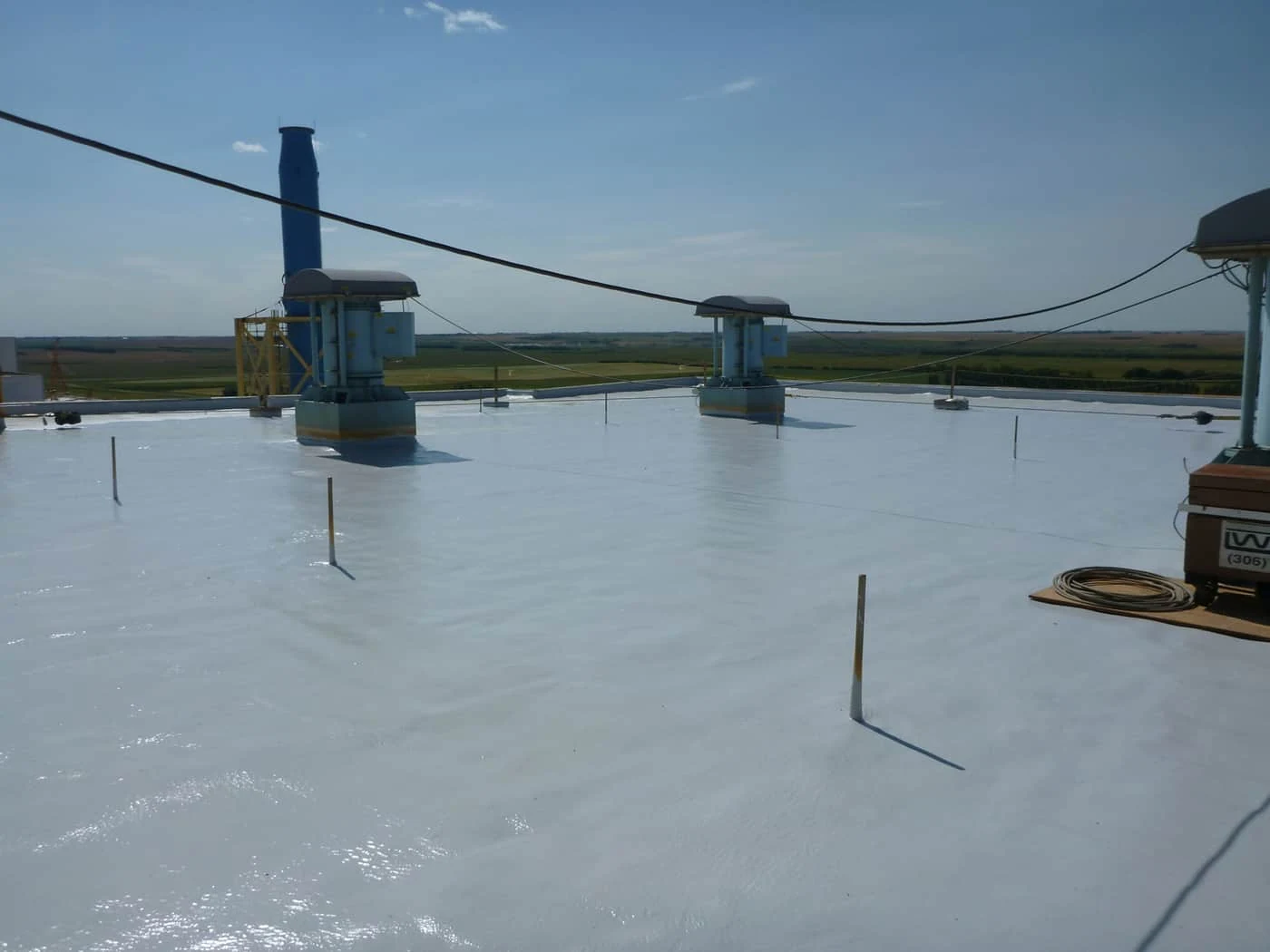
The same goes for roofs dense with pipe penetrations, vent stacks, and equipment curbs , foam flashes itself around irregular shapes instead of requiring a custom-cut boot or flashing detail at every single penetration. That's a real labor advantage on a roof with dozens of penetrations.
Foam's Insulation Value Against Gulf Humidity and Condensation
Foam is applied insulation and waterproofing in one layer, and its R-value per inch beats almost every other roofing insulation option. That matters here less for winter heating and more for controlling condensation on the underside of metal decks, where Gulf humidity meeting a cool interior surface creates its own moisture problem independent of the roof's exterior watertightness.
On buildings with process equipment generating interior humidity , some manufacturing operations, for example , foam's continuous insulation layer reduces the temperature differential that drives condensation, which can matter as much to the building's interior condition as the roof's exterior performance.
Wind Adhesion Instead of Mechanical Fastening
Foam roofs don't rely on mechanical fasteners for wind resistance the way membrane systems do , the foam is fully adhered to the substrate it's sprayed onto, spreading wind load across the entire bonded surface rather than concentrating it at fastener points.
That's an advantage in a high-wind coastal parish, but it depends entirely on proper substrate prep and spray technique. Foam applied over a dirty, wet, or poorly prepped surface won't adhere the way it needs to, and a foam roof that delaminates in sheets during a storm is almost always an installation problem, not a material one.
The Recoat Cycle Nobody Should Skip
Foam roofs need a recoat on a set schedule, not an as-needed basis. We build maintenance around:
- UV-protective topcoat reapplication on the manufacturer's recommended cycle
- Annual inspection for hail bruising or mechanical damage to the coating
- Prompt repair of any exposed foam before it absorbs water
- Granule or aggregate surfacing checks where applicable
- Documentation of coating thickness at each recoat for warranty purposes
Skipping a recoat cycle is the single most common reason we see foam roofs fail early. The foam itself can last decades; the protective coating over it is what actually needs the maintenance discipline.
Foam on New Construction vs Retrofit
Foam performs differently depending on whether it's going onto new construction or an existing retrofit. On new construction, we're spraying onto a clean, dry, purpose-built substrate, and adhesion is straightforward. On a retrofit over an aging metal building, surface prep becomes the whole ballgame.
Retrofit work near the industrial corridor often means dealing with decades of surface rust, chalking paint, and accumulated dust or process residue on the existing metal panels. We clean and, where needed, prime that surface before any foam goes down, because foam sprayed over a compromised substrate will eventually fail at the bond line regardless of foam quality.
For a building already scheduled for other roof-level work , new mechanical units, added conduit runs, structural repairs , we sequence the foam application after that work is done rather than working around it, so we're not cutting into a finished foam surface to accommodate later changes.
We also confirm ambient temperature and humidity conditions before spraying, since foam chemistry is sensitive to both. A batch sprayed too cold or into rising humidity off the lake can cure unevenly, producing soft spots or inconsistent density that only show up later during an inspection or a puncture repair.
Foam Roofing Questions From Industrial Building Owners
Can spray foam go directly over corrugated metal without tear-off?
Often, yes, if the panels are structurally sound and the substrate is properly cleaned and prepped first. Foam's self-leveling application is one of its main advantages on irregular metal roof profiles.
How often does a foam roof need to be recoated?
Recoat intervals follow the manufacturer's schedule and depend on UV exposure and coating wear. We track recoat timing as part of ongoing maintenance rather than waiting for visible damage.
Does foam roofing handle hurricane wind uplift as well as membrane systems?
Properly adhered foam performs well under wind load because the load spreads across the full bonded surface. Performance depends heavily on substrate prep and application quality.
What happens if a foam roof's coating gets damaged by hail?
Exposed foam needs prompt repair before it absorbs water, since foam itself is not waterproof without its protective coating intact. We inspect for hail bruising as part of routine maintenance visits.
Does an older metal building need extra prep before foam goes on?
Usually, yes. Surface rust, chalking paint, and accumulated residue all need to be addressed before spraying, since foam's bond depends entirely on the condition of the substrate underneath it.