Small Roofs Carrying an Outsized Grease and Exhaust Load
The standalone restaurants sitting on pad sites along Highway 90, Highway 171 and the retail corridors feeding the casinos have some of the smallest roof footprints we work on and some of the hardest-working roofs, pound for pound. A quick-service pad site or a sit-down restaurant roof faces a different set of stresses than most of this market: kitchen exhaust that coats the membrane in grease residue, a compressed footprint that leaves little margin for drainage error, and an owner who can't afford to close for more than a day or two if something fails.
Where These Buildings Sit and Why It Matters
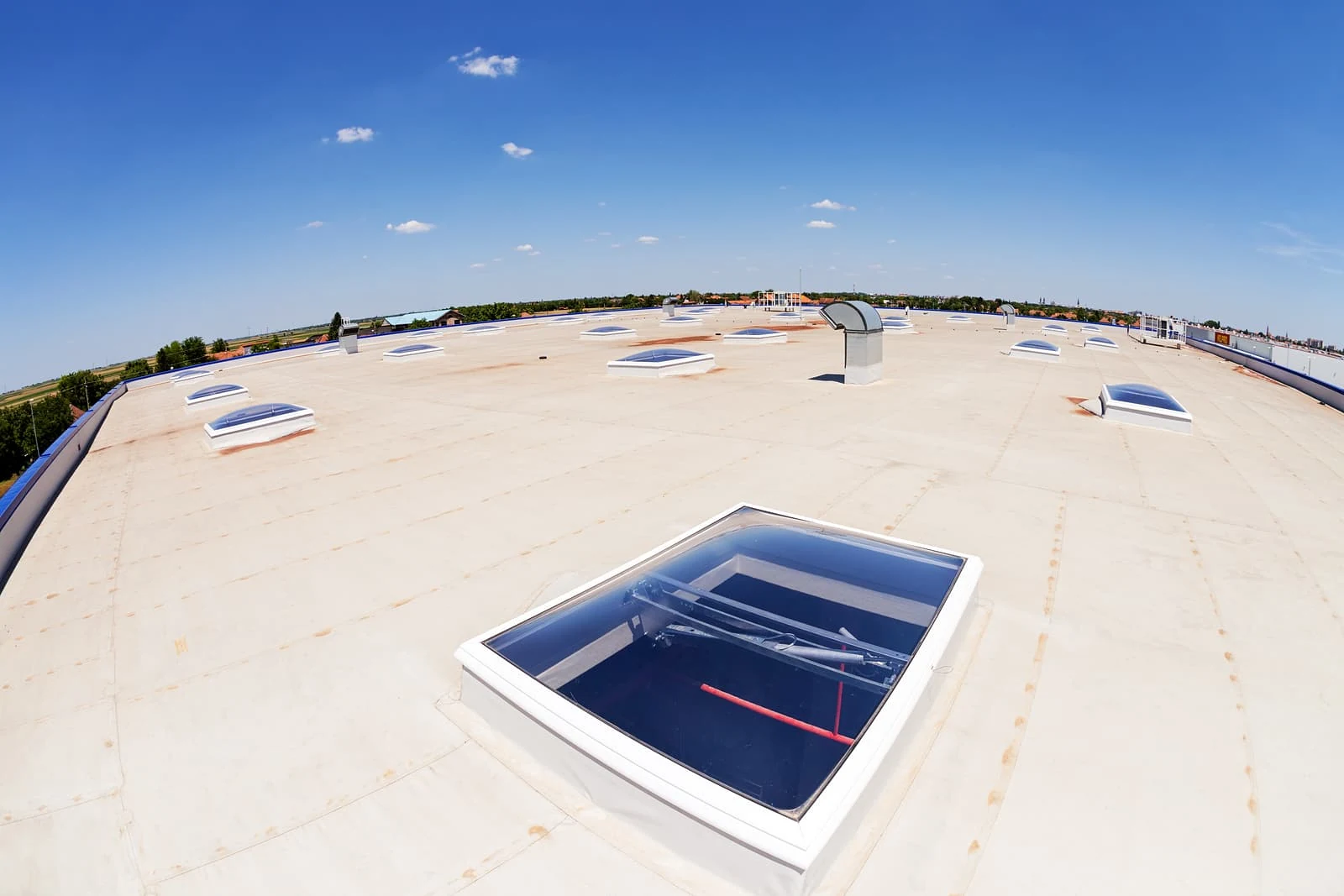
Pad-site restaurants cluster around Prien Lake Mall, along Nelson Road, and out toward Vinton and Sulphur wherever there's retail and casino traffic to draw from. Most are single-story with a low-slope membrane roof over the dining and kitchen area, a low parapet, and roof drains sized for a small footprint that don't have much tolerance for a clogged strainer or a slope problem before water starts backing up toward the roof edge.
Grease-Laden Exhaust and Membrane Degradation
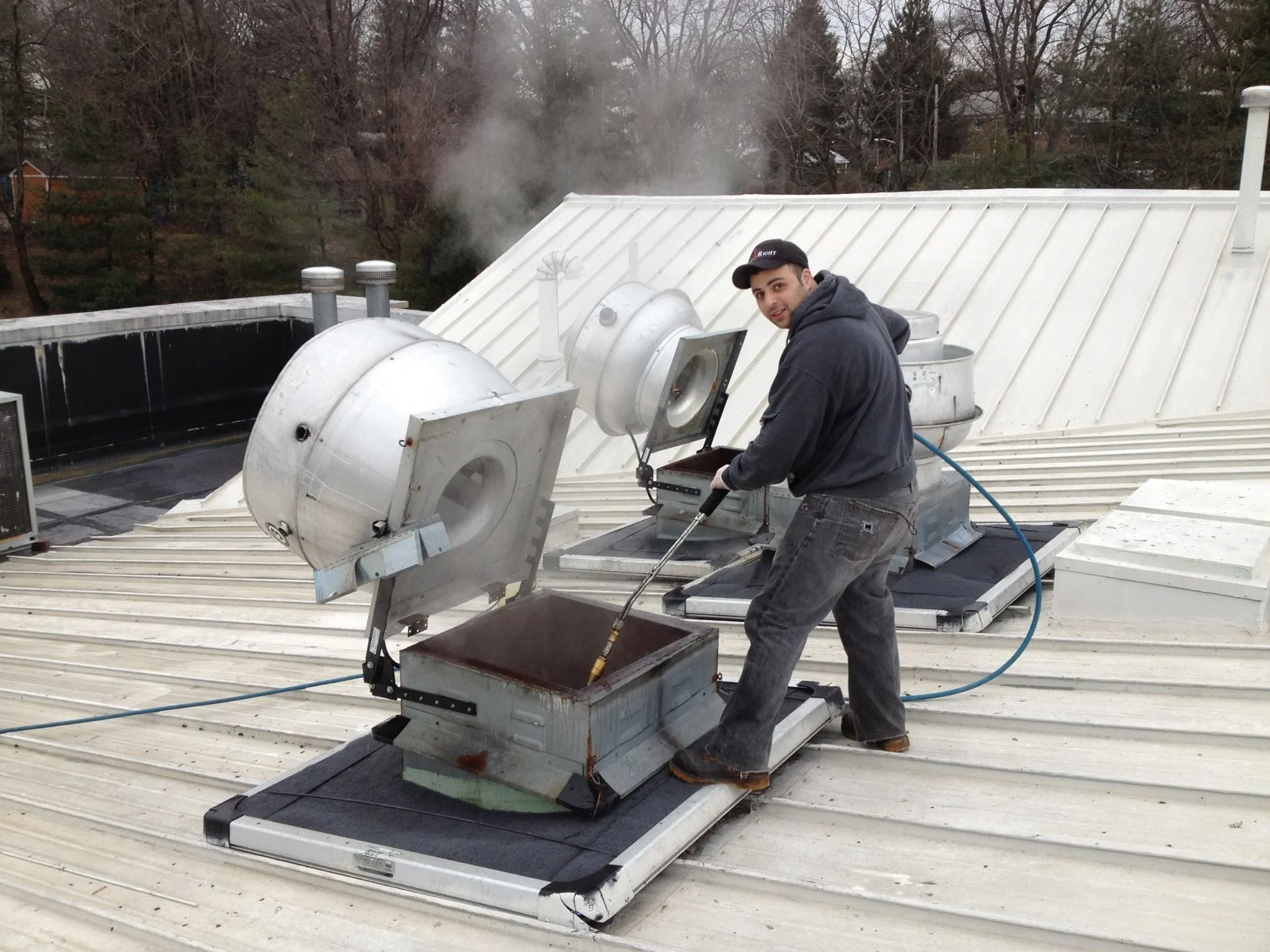
Kitchen exhaust systems vent grease-laden air across the roof surface around the exhaust fan and hood termination, and that residue breaks down standard membrane faster than clean rooftop air would. We see accelerated deterioration in a ring around kitchen exhaust penetrations on almost every restaurant roof we inspect, and it's one of the first things we check, since a membrane that looks fine everywhere else can be failing specifically at the exhaust termination. Grease-resistant flashing and membrane treatments around these penetrations matter more here than on any other building type in this market.
Downtime a Restaurant Can't Absorb
A restaurant that closes for a week loses a week of revenue it doesn't get back, and franchise operators often have brand-mandated reopening timelines tied to lease and franchise agreements. We plan restaurant roof repairs and replacements around the shortest reasonable closure window, sequencing kitchen and dining area work separately where possible so at least part of the operation can stay running while the rest gets addressed. For an emergency leak, our first priority is getting the space watertight enough to keep operating safely, with permanent repair scheduled around the owner's slowest business hours rather than shutting the whole building down.
Low Parapets and Wind Vulnerability
Small standalone buildings with low parapet walls are particularly exposed to wind uplift at the roof edge and corners, and Laura and Delta both demonstrated that on restaurant buildings across this region , membrane and coping loss concentrated at corners and edges more than in the field. We check edge metal and coping attachment closely on these smaller buildings, since the ratio of vulnerable edge length to total roof area is higher on a small pad-site building than on a big-box format store.
Drive-Thru Canopies and Freestanding Structures
Quick-service restaurants on these pad sites often add a freestanding canopy over the drive-thru lane, built and roofed separately from the main building on its own support structure. These canopies take direct wind exposure from every angle since they're not protected by an adjacent building, and the connection between the canopy roof and its support columns is a common failure point we check specifically, separate from the main roof inspection. An owner who's had the main building roof recently replaced can still have a canopy that's due for attention, since the two get maintained on completely different schedules in practice. We check canopy anchor bolts and structural connections during every roof inspection on these sites, beyond the membrane over the drive-thru lane itself, since a loose anchor bolt is a bigger safety issue than a small membrane leak would be.
- Kitchen exhaust and grease-resistant roofing details
- Low-slope membrane roofing over compact dining and kitchen footprints
- Edge metal and coping attachment on low-parapet buildings
- Roof drain sizing and strainer maintenance for small roof fields
- Franchise-standard roofing material and color requirements
- Phased repair sequencing to minimize closure time
Common Questions From Restaurant Owners and Operators
How fast can you get us reopened after roof damage?
Emergency tarp and dry-in can usually make a space safe to reopen within a day or two, with permanent repair scheduled around your slowest hours so the closure window for full replacement stays as short as possible.
Does grease exhaust actually damage the roof membrane?
Yes, we see accelerated wear in a ring around kitchen exhaust terminations on nearly every restaurant roof we inspect. It's a standard check point, not an unusual finding. We'd rather flag it early than have an owner discover it later as an active leak over the kitchen line.
Can you match our franchise's required roofing color and material?
We coordinate with franchise brand standards before ordering material, particularly for any visible mansard or parapet cap that has an approved color specification.
Why do small restaurant buildings seem to take more storm damage than bigger buildings?
Low parapet walls and a higher ratio of roof edge to total area make these buildings more exposed to wind uplift at corners and edges, which is exactly where we concentrate our post-storm inspections.
Can you do the work without closing the kitchen and dining room at the same time?
Often yes. We sequence kitchen exhaust area repairs separately from general dining area roofing where the layout allows it, so part of the operation can keep running.